Raptor 50 legal guide
Where Can You Own a Raptor 50?
50 BMG Laws by State and U.S. Territory
Current through: July 2026. The Raptor 50 is built for serious long-range shooters: a USA-made, single-shot bolt-action .50 BMG upper for AR-15 lower receivers, precision-machined with Lothar-Walther barrels and Big Kahuna factory-direct support. The legal side matters just as much as the build quality. This guide explains where .50 BMG ownership is generally allowed, where it is restricted, and what extra steps may apply before your local dealer can transfer a Raptor 50 to you.
Not legal advice: Firearm laws change quickly, local ordinances may add requirements, and pending litigation can affect enforcement. Confirm with your local FFL, current state code, and local counsel before buying, importing, transporting, or transferring a Raptor 50, a completed .50 BMG rifle, or .50 BMG ammunition.
 How the Raptor 50 is Treated for Transfers
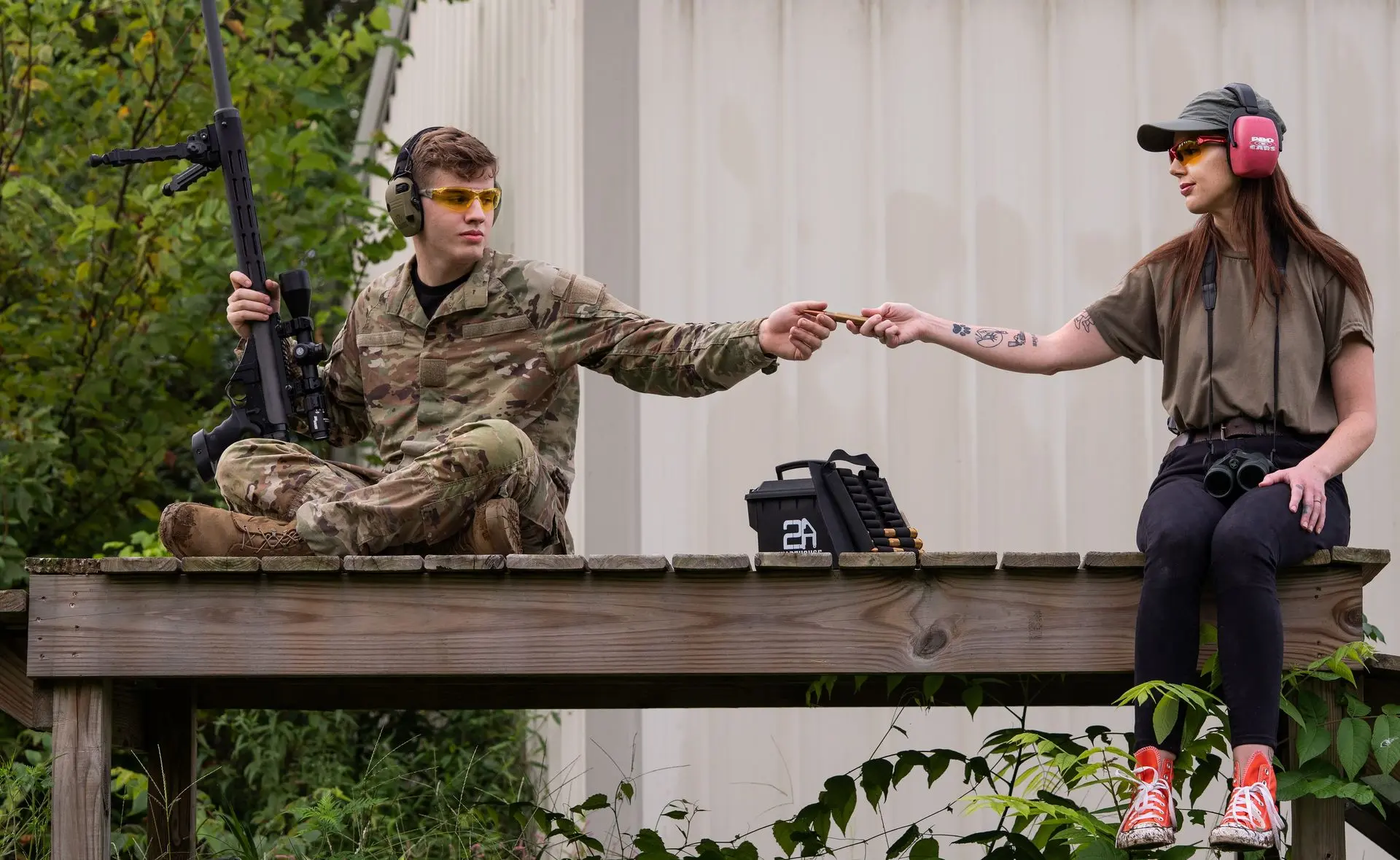
The Raptor 50 is not a mail-order accessory. In 2018 ATF's Firearms and Ammunition Technology Division determined that .50 BMG AR-15 uppers are firearms and must be transferred through FFLs. The Raptor 50 upper is serialized and ships to a Federal Firearms License dealer for transfer. The buyer must be 21 or older because it is a "receiver" .
- Federal transfer posture: Treat the Raptor 50 upper as a serialized receiver/firearm for dealer transfer purposes. Your FFL will run the required background check and complete the transfer paperwork.
- Product configuration: The Raptor 50 upper is a single-shot, bolt-action .50 BMG upper. That matters in states whose restrictions target semiautomatic Barrett-style rifles rather than all .50 BMG firearms.
- State-law posture: Some states regulate the completed .50 BMG rifle, some regulate the cartridge, some regulate receivers, and some require a local purchase permit or registration even when .50 BMG is not banned.
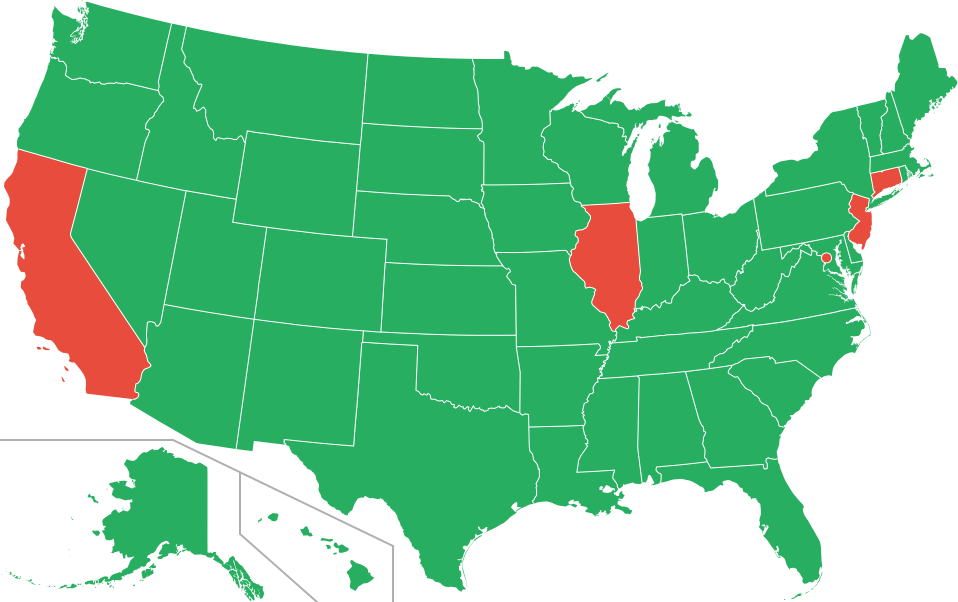
- Shipping policy note: No sales should be made to California, Illinois, New Jersey, the District of Columbia, or any other jurisdiction where the .50 BMG platform, the serialized receiver, or the resulting rifle is prohibited.
- Some states may have restrictions on obtaining or transferring an AR-15 lower. If in doubt, use a single shot AR-15 lower with no mag-well like ours.
- Helpful Big Kahuna links: Raptor 50 product page, Raptor 50 FAQ, and Raptor 50 safety information.
Jump to a State or Territory
Alabama | Alaska | Arizona | Arkansas | California | Colorado | Connecticut | Delaware | Florida | Georgia | Hawaii | Idaho | Illinois | Indiana | Iowa | Kansas | Kentucky | Louisiana | Maine | Maryland | Massachusetts | Michigan | Minnesota | Mississippi | Missouri | Montana | Nebraska | Nevada | New Hampshire | New Jersey | New Mexico | New York | North Carolina | North Dakota | Ohio | Oklahoma | Oregon | Pennsylvania | Rhode Island | South Carolina | South Dakota | Tennessee | Texas | Utah | Vermont | Virginia | Washington | West Virginia | Wisconsin | Wyoming | District of Columbia | American Samoa | Guam | Northern Mariana Islands | Puerto Rico | U.S. Virgin Islands
Alabama
Status: Generally legal. Alabama does not appear to have a state law that specifically bans .50 BMG rifles or .50 BMG ammunition.
- Beyond an FFL transfer: No state rifle-owner license, rifle registration, or state waiting period identified for a .50 BMG rifle. Ordinary federal dealer-transfer rules and Alabama prohibited-person rules still apply.
- Notes: NFA configurations remain subject to federal and state law. Local range, hunting, and discharge rules can still matter.
- Citations: Ala. Code § 13A-11-72 (certain persons forbidden to possess firearms).
Alaska
Status: Generally legal. Alaska does not appear to single out .50 BMG rifles or cartridges for special restrictions.
- Beyond an FFL transfer: No state purchase permit, rifle registration, or state waiting period identified for ordinary rifles.
- Notes: Federal age, background-check, prohibited-person, and NFA rules still apply.
- Citations: Alaska Stat. § 11.61.200 (misconduct involving weapons).
Arizona
Status: Generally legal. Arizona does not appear to have a .50 BMG-specific ban.
- Beyond an FFL transfer: No state rifle purchase permit, rifle registration, or state waiting period identified.
- Notes: Check federal rules and any local discharge or zoning limits for shooting ranges or private land.
- Citations: Ariz. Rev. Stat. § 13-3101 and § 13-3102 (weapons definitions and misconduct involving weapons).
Arkansas
Status: Generally legal. Arkansas does not appear to impose a .50 BMG-specific ban or licensing scheme.
- Beyond an FFL transfer: No state rifle-owner license, rifle registration, or state waiting period identified.
- Notes: Federal rules and Arkansas prohibited-person restrictions remain applicable.
- Citations: Ark. Code § 5-73-103 (possession by certain persons).
🛑California
Raptor 50 status: We do not ship for ordinary civilian sale. California regulates .50 BMG rifles in the same statutory chapter as assault weapons. A ".50 BMG rifle" is a centerfire rifle that can fire a .50 BMG cartridge and is not already an assault weapon or machine gun.
- What is banned: Manufacturing, distributing, transporting, importing, keeping for sale, offering for sale, giving, or lending a .50 BMG rifle is prohibited unless a statutory exception applies.
- Why this matters for the Raptor 50: The Raptor 50 is a serialized .50 BMG upper, and attaching it to a compatible lower creates a centerfire rifle capable of firing .50 BMG. California's ban makes this a no-go for ordinary new civilian sales, even though the Raptor 50 is single-shot and bolt action.
- Possession: Possession of a .50 BMG rifle is unlawful unless the rifle was lawfully possessed before January 1, 2005, timely registered with the California Department of Justice by April 30, 2006, or falls within a narrow permit/exemption. Registered .50 BMG rifles may be possessed only in listed places such as the registrant's property, certain ranges, approved exhibitions, or during compliant transport.
- Transfers: Registered .50 BMG rifles generally cannot be sold or transferred within California except to a licensed dealer or as otherwise specified by statute. A person moving into California with a .50 BMG rifle must obtain a DOJ permit before bringing it in or route it to a California licensed dealer for lawful disposition.
- A Raptor 50 cannot be shipped to California: An ordinary dealer transfer is not enough. New civilian purchase/import is generally unavailable; grandfathered possession depends on pre-2005 lawful possession and timely state registration. California also generally requires dealer processing, waiting periods, Firearm Safety Certificate compliance, and ammunition-vendor/background-check rules for otherwise lawful firearms and ammunition.
- Citations: Cal. Penal Code §§ 30525, 30530 (definitions), §§ 30600, 30610, 30665, 30675 (unlawful acts and exceptions), §§ 30905, 30930, 30940, 30945 (registration, transfer, move-in, and possession-location rules), and §§ 31000-31005 (DOJ permits).
- Note that even if the assault weapon banned is overturned California's harsh manufacturer liability laws will prevent Big Kahuna Guns from selling to the state.
Colorado
Raptor 50 status: Generally legal at the state level, with no .50 BMG-specific ban identified. Some local ordinances may regulate or prohibit certain semiautomatic rifles, but the Raptor 50 is a single-shot bolt-action upper rather than a semiautomatic rifle.
- Raptor 50 transfer notes: The serialized upper still ships to an FFL. Colorado requires background checks for most private firearm transfers as well as dealer transfers. Colorado also has a state waiting period for firearm delivery and a 15-round magazine-capacity limit.
- 2026 change to watch: Effective August 1, 2026, Colorado's "specified semiautomatic firearms" law is expected to require a Firearm Safety Course Eligibility Card and training for purchase of many semiautomatic firearms that accept detachable magazines. Because the Raptor 50 is single-shot and bolt action, that semiautomatic purchase-card requirement should be checked with a Colorado FFL but does not appear to be aimed at the Raptor 50's core configuration.
- Citations: Colo. Rev. Stat. §§ 18-12-112 and 18-12-112.5 (background checks), § 18-12-302 (large-capacity magazines), and SB 25-003 (specified semiautomatic firearms, effective August 1, 2026).
🛑Connecticut
Raptor 50 status: Big Kahuna Guns does not ship the Raptor 50 to Connecticut. Connecticut regulates and prohibits the acquisition or possession of firearms that meet its statutory “assault weapon” definition, subject to limited exceptions and grandfathering rules. The statute specifically names the Barrett Light-Fifty model 82A1 among specified semiautomatic firearms. The Raptor 50 is a single-shot, bolt-action .50 BMG upper and is not that named Barrett model; however, Connecticut law is configuration-specific, and an FFL or qualified Connecticut firearms attorney should confirm the treatment of the serialized upper and the completed firearm before any transaction or possession.
- Transfer and eligibility: Connecticut long-gun transfers require compliance with state authorization and recordkeeping procedures. A purchaser of a long gun generally must hold a valid Connecticut long-gun eligibility certificate, pistol permit, pistol eligibility certificate, or dealer permit, as applicable. A standard FFL transfer does not make a firearm lawful if it is prohibited as an assault weapon or otherwise restricted under Connecticut law.
- Assault-weapon rules: Connecticut assault weapons may generally be possessed only when covered by a valid certificate of possession, a statutory exception, or another lawful exemption. Transfers of assault weapons are restricted and should be evaluated by a qualified Connecticut FFL or attorney.
- Important: This summary is not legal advice. Connecticut laws, agency procedures, and court decisions can change. Before acquiring, transferring, importing, or possessing any firearm or ammunition, confirm current requirements with the Connecticut Department of Emergency Services and Public Protection, a Connecticut FFL, and qualified legal counsel.
- Citations: Conn. Gen. Stat. § 53-202a (assault-weapon definitions, including specified firearms); § 53-202c and § 53-202d (possession and certificates of possession); § 29-37a and § 29-37p (long-gun transfer procedures and eligibility certificates). See also the Connecticut DESPP firearms and permit resources.
Delaware
Raptor 50 status: Generally not banned by caliber alone, but confirm with the receiving Delaware FFL. Delaware's assault-weapon law includes specific Barrett .50 caliber models, including Barrett .50 cal. M87, M107A1, and M82A1-type rifles. The Raptor 50 is a single-shot bolt-action upper, not one of those semiautomatic Barrett platforms.
- Raptor 50 transfer notes: The Raptor 50 still ships to an FFL as a serialized receiver/firearm. A normal FFL transfer cannot be used to acquire a Delaware-banned assault weapon, but a non-assault-weapon single-shot .50 BMG platform is not banned solely because of caliber. Delaware also requires background checks for most private firearm transfers.
- Possession: Delaware grandfathered some assault weapons lawfully possessed before the ban, but new manufacture, sale, transfer, import, purchase, and receipt are generally prohibited unless an exception applies.
- Citations: Del. Code tit. 11, § 1465 (assault-weapon definitions and prohibitions), § 1466 (exceptions), and § 1448B (background checks for private sales).
Florida
Status: Generally legal. Florida does not appear to have a state law specifically banning .50 BMG rifles or cartridges.
- Beyond an FFL transfer: Florida imposes a waiting period for firearm purchases, with exceptions such as valid Florida concealed weapon/firearm license holders and certain trade-ins. Florida law also restricts licensed dealers from selling firearms to persons under 21, with statutory exceptions.
- Notes: No state rifle registration or rifle-owner license identified for ordinary rifles.
- Citations: Fla. Stat. § 790.065 (sale and delivery by licensed dealers) and § 790.0655 (waiting period).
Georgia
Status: Generally legal. Georgia does not appear to impose a .50 BMG-specific ban.
- Beyond an FFL transfer: No state purchase permit, rifle registration, or state waiting period identified for ordinary rifles.
- Notes: Federal dealer-transfer, prohibited-person, and NFA rules apply.
- Citations: O.C.G.A. § 16-11-131 (possession by convicted felons and first-offender probationers).
Hawaii
Status: Generally legal if the rifle is not otherwise prohibited. Hawaii does not appear to ban .50 BMG rifles by caliber alone.
- Beyond an FFL transfer: Hawaii requires a permit to acquire firearms and registration after acquisition. These requirements apply to rifles as well as handguns. Importing a firearm into Hawaii also triggers registration obligations.
- Notes: A .50 BMG rifle cannot simply be shipped to or acquired from an FFL without satisfying Hawaii's local permit and registration process.
- Citations: Haw. Rev. Stat. § 134-2 (permits to acquire) and § 134-3 (registration).
Idaho
Status: Generally legal. Idaho does not appear to have a .50 BMG-specific restriction.
- Beyond an FFL transfer: No state purchase permit, rifle registration, or state waiting period identified.
- Notes: Federal rules and Idaho prohibited-person rules still apply.
- Citations: Idaho Code § 18-3316 (unlawful possession by certain persons).
🛑Illinois
Raptor 50 status: Do not ship for ordinary civilian sale. Illinois law separately restricts assault weapons, assault-weapon attachments, .50 caliber rifles, and .50 caliber cartridges. A ".50 caliber cartridge" includes .50 BMG, and a ".50 caliber rifle" is a centerfire rifle capable of firing a .50 caliber cartridge.
- What is banned: Since January 10, 2023, it has been unlawful to manufacture, deliver, sell, import, or purchase a .50 caliber rifle or .50 caliber cartridges, except under statutory exceptions.
- Why this matters for the Raptor 50: The Raptor 50 is a serialized .50 BMG upper that can be assembled into a centerfire rifle capable of firing .50 BMG. Illinois also restricts .50 BMG cartridges themselves. This makes Illinois one of the clearest no-sale states for ordinary Raptor 50 customers.
- Possession: Since January 1, 2024, possession is unlawful unless the person lawfully possessed the rifle/cartridge before January 10, 2023, or inherited it from an authorized possessor, and completed the Illinois State Police endorsement-affidavit process by the required deadline, or another exception applies.
- Possession locations and transfers: Grandfathered items are limited to specified locations such as private property, licensed dealers/gunsmiths for repair, ranges/competitions, and transport to and from those locations. Transfers are limited, including to heirs, out-of-state recipients who keep the item out of Illinois, or FFL dealers.
- Raptor 50 transfer notes: Illinois residents need a Firearm Owner's Identification Card to possess firearms or ammunition. A standard FFL transfer cannot be used to acquire a banned .50 caliber rifle or .50 BMG cartridge. Illinois also imposes a 72-hour firearm waiting period and dealer processing for most private sales.
- Citations: 720 ILCS 5/24-1.9 (assault weapons, .50 caliber rifles, and .50 caliber cartridges), 430 ILCS 65 (FOID Act), and 720 ILCS 5/24-3 (waiting period).
Indiana
Status: Generally legal. Indiana does not appear to have a .50 BMG-specific restriction.
- Beyond an FFL transfer: No state rifle purchase permit, rifle registration, or state waiting period identified.
- Notes: Federal dealer-transfer and prohibited-person rules apply.
- Citations: Ind. Code § 35-47-2-1 and related Chapter 35-47 weapons provisions.
Iowa
Status: Generally legal. Iowa does not appear to regulate .50 BMG rifles by caliber.
- Beyond an FFL transfer: No state purchase permit, rifle registration, or state waiting period identified for ordinary rifles.
- Notes: Federal rules and Iowa prohibited-person restrictions still apply.
- Citations: Iowa Code § 724.26 (possession by felons and others).
Kansas
Status: Generally legal. Kansas does not appear to have a .50 BMG-specific ban.
- Beyond an FFL transfer: No state purchase permit, rifle registration, or state waiting period identified.
- Notes: Federal firearm and NFA rules remain applicable.
- Citations: Kan. Stat. § 21-6307 (criminal possession of a weapon by a convicted felon).
Kentucky
Status: Generally legal. Kentucky does not appear to impose a .50 BMG-specific restriction.
- Beyond an FFL transfer: No state purchase permit, rifle registration, or state waiting period identified.
- Notes: Federal dealer-transfer and prohibited-person rules apply.
- Citations: Ky. Rev. Stat. § 527.040 (possession of firearm by convicted felon).
Louisiana
Status: Generally legal. Louisiana does not appear to ban .50 BMG rifles or ammunition by caliber.
- Beyond an FFL transfer: No state rifle purchase permit, rifle registration, or state waiting period identified.
- Notes: Federal rules, Louisiana prohibited-person rules, and local discharge ordinances still matter.
- Citations: La. Rev. Stat. § 14:95.1 (possession by certain felons).
Maine
Status: Generally legal. Maine does not appear to impose a .50 BMG-specific restriction.
- Beyond an FFL transfer: Maine has a firearm waiting-period law that can affect dealer and commercial sales. No state rifle-owner license or rifle registration identified.
- Notes: Federal dealer-transfer and prohibited-person rules apply.
- Citations: Me. Rev. Stat. tit. 25, § 2014 (waiting period) and tit. 15, § 393 (possession by prohibited persons).
Maryland
Raptor 50 status: Potentially transferable if the Maryland FFL confirms the exact configuration is not an assault weapon. Maryland does not ban every .50 BMG rifle by caliber alone, but the "Barrett light .50 cal. semiautomatic rifle" is listed as an assault long gun/assault weapon and is treated as a regulated firearm. The Raptor 50 is a single-shot bolt-action upper, not a Barrett light .50 semiautomatic rifle.
- What is banned: Maryland generally prohibits transporting an assault weapon into the state and possessing, selling, offering to sell, transferring, purchasing, or receiving an assault weapon, subject to grandfathering and statutory exceptions.
- Grandfathered possession: A person who lawfully possessed a covered assault long gun before October 1, 2013, may generally keep it, but transfers are limited.
- Raptor 50 transfer notes: The Raptor 50 still ships to an FFL as a serialized receiver/firearm. Private rifle and shotgun transfers generally must be processed through a dealer or designated law-enforcement process. A standard FFL transfer cannot authorize a prohibited assault-weapon transfer, so the receiving dealer should verify the serialized upper and final build are lawful in Maryland before shipment.
- Citations: Md. Criminal Law § 4-301 (assault weapon definitions), § 4-303 (assault weapon prohibitions), Md. Public Safety § 5-101 (regulated firearm definitions), § 5-123 (one regulated firearm per 30 days), and § 5-204.1 (rifle and shotgun private-transfer background checks).
Massachusetts
Raptor 50 status: License-heavy and dealer-confirmation required. Massachusetts requires state firearm licensing for possession and acquisition of firearms and ammunition. The Raptor 50 is single-shot and bolt action, which is important because many Massachusetts assault-style firearm restrictions focus on semiautomatic firearms, but the receiving dealer should confirm the serialized upper and final configuration before transfer.
- Raptor 50 transfer notes: A Massachusetts buyer needs the appropriate Firearms Identification Card or License to Carry. Transfers must be made to properly licensed persons and reported through the state system. An FFL transfer alone is not enough.
- Assault-style firearm issue: Before acquiring any semiautomatic .50 BMG rifle, confirm whether the exact make/model, copies/duplicates, or features make it an assault-style firearm under current Massachusetts law. Covered firearms are not available for ordinary new civilian transfer.
- Citations: Mass. Gen. Laws ch. 140, § 121 (definitions), § 129B (FID cards), § 131 (licenses to carry), and ch. 269, § 10 (unlawful possession).
Michigan
Status: Generally legal. Michigan does not appear to have a .50 BMG-specific restriction for ordinary rifles.
- Beyond an FFL transfer: No state long-gun purchase permit, long-gun registration, or state waiting period identified for ordinary rifles. Michigan's purchase-license/record requirements focus primarily on pistols.
- Notes: Federal dealer-transfer and prohibited-person rules apply.
- Citations: Mich. Comp. Laws § 750.224f (possession by certain felons) and § 28.422 (pistol licensing).
Minnesota
Raptor 50 status: Generally legal for most buyers who can lawfully receive firearms, with dealer confirmation. Minnesota's listed "semiautomatic military-style assault weapons" include Barrett Model 82A1-type firearms, but the Raptor 50 is single-shot and bolt action.
- Raptor 50 transfer notes: The Raptor 50 still ships to an FFL as a serialized receiver/firearm.
- Notes: No state registration of ordinary rifles identified.
- Citations: Minn. Stat. § 624.712 (definitions), § 624.7131 (transferee permits), and § 624.7132 (report of transfer).
Mississippi
Status: Generally legal. Mississippi does not appear to regulate .50 BMG rifles or ammunition by caliber.
- Beyond an FFL transfer: No state rifle purchase permit, rifle registration, or state waiting period identified.
- Notes: Federal rules and Mississippi prohibited-person restrictions apply.
- Citations: Miss. Code § 97-37-5 (possession by felons).
Missouri
Status: Generally legal. Missouri does not appear to impose a .50 BMG-specific restriction.
- Beyond an FFL transfer: No state rifle purchase permit, rifle registration, or state waiting period identified.
- Notes: Federal dealer-transfer and prohibited-person rules apply.
- Citations: Mo. Rev. Stat. § 571.070 (unlawful possession of a firearm).
Montana
Status: Generally legal. Montana does not appear to have a .50 BMG-specific ban.
- Beyond an FFL transfer: No state purchase permit, rifle registration, or state waiting period identified for ordinary rifles.
- Notes: Federal law and Montana prohibited-person rules still apply.
- Citations: Mont. Code § 45-8-313 (unlawful possession by convicted person).
Nebraska
Status: Generally legal. Nebraska does not appear to regulate .50 BMG rifles by caliber.
- Beyond an FFL transfer: No state long-gun purchase permit, long-gun registration, or state waiting period identified.
- Notes: Federal dealer-transfer and prohibited-person rules apply.
- Citations: Neb. Rev. Stat. § 28-1206 (possession by prohibited persons).
Nevada
Status: Generally legal. Nevada does not appear to ban .50 BMG rifles or ammunition by caliber.
- Beyond an FFL transfer: Nevada generally requires most private firearm transfers to be processed through a licensed dealer/background-check process. No state rifle registration or state waiting period identified for ordinary rifles.
- Notes: Federal firearm and NFA rules apply.
- Citations: Nev. Rev. Stat. § 202.2547 (private-sale background checks) and § 202.360 (ownership or possession by certain persons prohibited).
New Hampshire
Status: Generally legal. New Hampshire does not appear to have a .50 BMG-specific restriction.
- Beyond an FFL transfer: No state purchase permit, rifle registration, or state waiting period identified.
- Notes: Federal dealer-transfer and prohibited-person rules apply.
- Citations: N.H. Rev. Stat. § 159:3 (felonious use/possession restrictions).
🛑New Jersey
Raptor 50 status: Do not ship for ordinary civilian sale. New Jersey classifies any centerfire rifle capable of firing a .50 BMG cartridge as a "destructive device," with limited antique, curio-or-relic, and blank-fire historical reenactment exceptions.
- Why this matters for the Raptor 50: The Raptor 50 is a serialized .50 BMG upper that can be assembled into a centerfire rifle capable of firing .50 BMG. New Jersey's destructive-device treatment makes this a no-sale jurisdiction for ordinary Raptor 50 customers.
- What is banned: A .50 BMG rifle is treated as a destructive device, and possession of destructive devices is not available through an ordinary rifle purchase. New Jersey also requires a firearms purchaser identification card for rifle and shotgun possession/acquisition generally.
- Raptor 50 transfer notes: An FFL transfer is not enough and ordinary civilian acquisition is generally unavailable. For otherwise lawful rifles and shotguns, New Jersey requires a firearms purchaser identification card, safety-training compliance, and dealer processing/background checks for most transfers.
- Citations: N.J. Stat. § 2C:39-1(c)(5), (mm) (destructive-device and .50 BMG cartridge definitions), § 2C:39-5 (unlawful possession of weapons), and § 2C:58-3 (firearms purchaser identification card and dealer processing).
Note:
On July 17, 2026, the Third Circuit (en banc) struck down New Jersey’s “assault firearm” ban and large-capacity magazine restrictions as violating the Second Amendment. That ruling does not appear to affect the separate “destructive device” classification of centerfire rifles capable of firing a .50 BMG cartridge. The no-sale status for the Raptor 50 therefore remains unchanged.
New Mexico
Status: Generally legal. New Mexico does not appear to impose a .50 BMG-specific ban.
- Beyond an FFL transfer: New Mexico requires background checks for most firearm sales and has a firearm waiting-period law. No state rifle registration or rifle-owner license identified.
- Notes: Federal dealer-transfer and prohibited-person rules apply.
- Citations: N.M. Stat. § 30-7-7.1 (background checks for firearm sales) and HB 129 / § 30-7-7.3 (waiting period).
New York
Raptor 50 status: Generally legal only if the receiving FFL confirms the serialized upper and final build are not an assault weapon or otherwise prohibited. New York State does not appear to ban all .50 BMG rifles by caliber alone. The Raptor 50 is single-shot and bolt action, so it is different from semiautomatic rifles covered by New York's semiautomatic-rifle license and assault-weapon rules. New York City and other local rules may be stricter.
- Raptor 50 transfer notes: The Raptor 50 still ships to an FFL as a serialized receiver/firearm. A person must have a semiautomatic rifle license to purchase or take possession of a semiautomatic rifle, but the Raptor 50's single-shot bolt-action configuration should be checked separately with the receiving dealer. Ammunition sales are subject to New York's state background-check process. Private firearm transfers generally must be processed through a dealer, with limited exceptions.
- Rifle type matters: A bolt-action or single-shot .50 BMG build is different from a semiautomatic magazine-fed rifle under New York law. Confirm the exact make, action type, lower configuration, and local rules before acquisition.
- Citations: N.Y. Penal Law § 265.00 (firearm and assault-weapon definitions), § 400.00 (licenses, including semiautomatic rifle licensing), Gen. Bus. Law § 898 (private-sale background checks), and Penal Law § 400.03 (ammunition-sale database/background checks).
North Carolina
Status: Generally legal. North Carolina does not appear to have a .50 BMG-specific restriction.
- Beyond an FFL transfer: No state long-gun purchase permit, long-gun registration, or state waiting period identified.
- Notes: Federal dealer-transfer and prohibited-person rules apply. Local discharge and range rules may matter.
- Citations: N.C. Gen. Stat. § 14-415.1 (possession by felon).
North Dakota
Status: Generally legal. North Dakota does not appear to regulate .50 BMG rifles by caliber.
- Beyond an FFL transfer: No state rifle purchase permit, rifle registration, or state waiting period identified.
- Notes: Federal rules and North Dakota prohibited-person restrictions apply.
- Citations: N.D. Cent. Code ch. 62.1-02 (weapons restrictions).
Ohio
Status: Generally legal. Ohio does not appear to have a state .50 BMG-specific ban.
- Beyond an FFL transfer: No state rifle purchase permit, rifle registration, or state waiting period identified.
- Notes: Federal dealer-transfer, prohibited-person, and NFA rules apply.
- Citations: Ohio Rev. Code § 2923.13 (having weapons while under disability).
Oklahoma
Status: Generally legal. Oklahoma does not appear to ban .50 BMG rifles or cartridges by caliber.
- Beyond an FFL transfer: No state rifle purchase permit, rifle registration, or state waiting period identified.
- Notes: Federal dealer-transfer and prohibited-person rules apply.
- Citations: Okla. Stat. tit. 21, § 1283 (convicted felons and delinquents).
Oregon
Status: Generally legal. Oregon does not appear to have a .50 BMG-specific ban. Oregon's Measure 114 permit-to-purchase and large-capacity-magazine provisions have been in litigation and, as of this June 2026 research check, were not treated as fully implemented for ordinary firearm purchases.
- Beyond an FFL transfer: Oregon requires background checks for most private firearm transfers through a dealer or state process. No active state rifle registration identified.
- Watch item: If Measure 114 or successor legislation becomes enforceable, Oregon could require a permit to purchase/acquire firearms and restrict magazines over 10 rounds. Check Oregon State Police and current court status before publication or sale.
- Citations: Or. Rev. Stat. § 166.412 (dealer background checks), § 166.435 (private transfers), and Measure 114 text.
Pennsylvania
Status: Generally legal. Pennsylvania does not appear to impose a .50 BMG-specific restriction for ordinary rifles.
- Beyond an FFL transfer: No state long-gun purchase permit, long-gun registration, or state waiting period identified. Dealer transfers still go through the Pennsylvania Instant Check System or federal process as applicable.
- Notes: Federal rules and Pennsylvania prohibited-person rules apply.
- Citations: 18 Pa. Cons. Stat. § 6105 (persons not to possess firearms) and § 6111 (sale or transfer of firearms).
Rhode Island
Raptor 50 status: Potentially transferable with Rhode Island waiting-period and dealer compliance if the receiving FFL confirms the Raptor 50 is outside the assault-weapon definition. Rhode Island's 2025 assault-weapons law affects semiautomatic rifles that meet the statutory definition. The Raptor 50 is single-shot and bolt action, so it should be analyzed differently from semiautomatic .50 BMG platforms.
- Raptor 50 transfer notes: The Raptor 50 still ships to an FFL as a serialized receiver/firearm. Rhode Island imposes a state waiting period and transfer paperwork/safety-certificate procedures for firearm purchases. A covered assault weapon cannot be newly acquired through an ordinary FFL transfer.
- Grandfathering/possession: Existing owners of covered assault weapons should verify current certificate, registration, possession, transfer, and disposition deadlines, especially around the July 2026 implementation period.
- Citations: R.I. Gen. Laws ch. 11-47 (weapons generally), including § 11-47-35 (waiting period), and ch. 11-47.1 (Assault Weapons Ban Act; confirm final current codification on the Rhode Island General Assembly site).
South Carolina
Status: Generally legal. South Carolina does not appear to ban .50 BMG rifles or ammunition by caliber.
- Beyond an FFL transfer: No state rifle purchase permit, rifle registration, or state waiting period identified.
- Notes: Federal dealer-transfer and prohibited-person rules apply.
- Citations: S.C. Code § 16-23-30 and related weapons provisions.
South Dakota
Status: Generally legal. South Dakota does not appear to have a .50 BMG-specific restriction.
- Beyond an FFL transfer: No state rifle purchase permit, rifle registration, or state waiting period identified.
- Notes: Federal rules and South Dakota prohibited-person restrictions apply.
- Citations: S.D. Codified Laws § 22-14-15 (possession by certain persons).
Tennessee
Status: Generally legal. Tennessee does not appear to regulate .50 BMG rifles by caliber.
- Beyond an FFL transfer: No state rifle purchase permit, rifle registration, or state waiting period identified.
- Notes: Federal dealer-transfer, prohibited-person, and NFA rules apply.
- Citations: Tenn. Code § 39-17-1307 (unlawful carrying or possession of weapons).
Texas
Status: Generally legal. Texas does not appear to have a .50 BMG-specific ban.
- Beyond an FFL transfer: No state rifle purchase permit, rifle registration, or state waiting period identified.
- Notes: Federal dealer-transfer, prohibited-person, and NFA rules apply.
- Citations: Tex. Penal Code ch. 46, including § 46.04 (unlawful possession of firearm).
Utah
Status: Generally legal. Utah does not appear to impose a .50 BMG-specific restriction.
- Beyond an FFL transfer: No state rifle purchase permit, rifle registration, or state waiting period identified.
- Notes: Federal rules and Utah prohibited-person restrictions apply.
- Citations: Utah Code § 76-10-503 (restrictions on possession by certain persons).
Vermont
Status: Generally legal. Vermont does not appear to ban .50 BMG rifles or cartridges by caliber.
- Beyond an FFL transfer: Vermont requires most private firearm transfers to go through a licensed dealer/background check, limits rifle magazines over 10 rounds, and has a firearm waiting-period law. No state rifle registration identified.
- Notes: A .50 BMG rifle with a detachable magazine should be checked for magazine compliance, even if the rifle itself is lawful.
- Citations: 13 V.S.A. § 4019 (private-sale background checks), § 4021 (large-capacity magazines), and § 4015 (waiting period; verify current section numbering).
Virginia
Status: Generally legal. Virginia does not appear to have a .50 BMG-specific ban.
- Beyond an FFL transfer: Virginia requires background checks for most firearm sales, including many private transfers. No state rifle registration or state waiting period identified for ordinary rifles.
- Notes: Federal rules and Virginia prohibited-person restrictions apply.
- Citations: Va. Code § 18.2-308.2:5 (background checks) and § 18.2-308.2 (possession by convicted felons and others).
Washington
Raptor 50 status: Generally not banned by .50 BMG caliber alone. Washington's assault-weapon definition specifically includes Barrett .50 cal. M87, M107A1, and M82A1-type rifles. The Raptor 50 is single-shot and bolt action and legal, unlike semi-automatic Barrett platforms. We recommend getting a Single-Shot AR-15 lower with no mag-well because of the AR-15 ban. We recommend calling ahead to your FFL and let them know that the Raptor 50 is single shot bolt action.
- What is banned: Washington generally prohibits manufacturing, importing, distributing, selling, or offering for sale an assault weapon. Existing possession is not the same as new acquisition and was not generally made unlawful by the 2023 ban.
- Raptor 50 transfer notes: The Raptor 50 still ships to an FFL as a serialized receiver/firearm. All firearm sales/transfers generally require dealer processing/background checks, and Washington imposes waiting-period and safety-training/attestation requirements for firearm purchases. A listed/copycat assault weapon cannot be newly acquired through an ordinary FFL transfer.
- Citations: Wash. Rev. Code § 9.41.010 (definitions, including assault weapons), § 9.41.390 (assault-weapon prohibition), § 9.41.113 (firearm sales/transfers), and § 9.41.090 (dealer delivery/background-check requirements).
- FFL Dealers can contact William Kirk of Washington Gun Law if they have questions about the Raptor 50 and legality in Washington State.
West Virginia
Status: Generally legal. West Virginia does not appear to have a .50 BMG-specific restriction.
- Beyond an FFL transfer: No state rifle purchase permit, rifle registration, or state waiting period identified.
- Notes: Federal dealer-transfer and prohibited-person rules apply.
- Citations: W. Va. Code § 61-7-7 (persons prohibited from possessing firearms).
Wisconsin
Status: Generally legal. Wisconsin does not appear to regulate .50 BMG rifles by caliber.
- Beyond an FFL transfer: No state rifle purchase permit, rifle registration, or state waiting period identified.
- Notes: Federal rules and Wisconsin prohibited-person restrictions apply.
- Citations: Wis. Stat. § 941.29 (possession of firearm by felon and others).
Wyoming
Status: Generally legal. Wyoming does not appear to have a .50 BMG-specific restriction.
- Beyond an FFL transfer: No state rifle purchase permit, rifle registration, or state waiting period identified.
- Notes: Federal dealer-transfer, prohibited-person, and NFA rules apply.
- Citations: Wyo. Stat. § 6-8-102 (use/possession of firearms by certain persons; see current Title 6 weapons provisions).
🛑District of Columbia
Raptor 50 status: Do not ship for ordinary civilian sale. D.C. requires firearms to be registered, and D.C. law bars registration of .50 BMG rifles and assault weapons.
- Why this matters for the Raptor 50: The Raptor 50 is a serialized .50 BMG upper that can be assembled into a .50 BMG rifle. Because .50 BMG rifles cannot be registered for ordinary civilian ownership in D.C., a normal FFL transfer cannot make possession lawful.
- Raptor 50 transfer notes: D.C. registration is mandatory for lawful possession. Do not treat D.C. as an ordinary FFL-transfer jurisdiction for the Raptor 50.
- Notes: D.C. also has strict ammunition, magazine, storage, and transport rules.
- Citations: D.C. Code § 7-2502.01 (registration requirement) and § 7-2502.02 (registration prohibitions, including .50 BMG rifles and assault weapons).
American Samoa
Status: Highly regulated; no .50 BMG-specific rule identified. Firearm possession and importation in American Samoa are controlled by local licensing and police authorization rules, so acquisition is not comparable to an ordinary state FFL transfer.
- Beyond an FFL transfer: Expect local license, import, and police-approval requirements before possession or import of any rifle. Confirm directly with the Department of Public Safety before shipping or traveling with a firearm.
- Notes: Island-specific customs and import controls may be the practical gating issue even when no caliber-specific ban is listed.
- Citations: American Samoa Code Annotated §§ 46.4201 et seq. (weapons control provisions; verify current local code and administrative practice).
Guam
Status: Generally legal only through Guam's licensing and registration system; no .50 BMG-specific ban identified.
- Beyond an FFL transfer: Guam requires a firearms identification card and registration of firearms. Importation and acquisition must be coordinated with Guam authorities and local dealers.
- Notes: A .50 BMG rifle should be treated as subject to the same firearm ID, registration, and import rules as other rifles unless Guam authorities classify the particular firearm differently.
- Citations: 10 Guam Code Ann. ch. 60, including §§ 60103, 60106, and 60109 (firearms ID and registration provisions; verify current compilation).
Northern Mariana Islands
Status: Regulated; no .50 BMG-specific ban identified in this research pass. CNMI requires local firearms licensing/identification and registration procedures for lawful possession and acquisition.
- Beyond an FFL transfer: Expect local Weapons Identification Card, registration, and import/transport compliance before acquiring or possessing a rifle.
- Notes: Verify with the Department of Public Safety and current CNMI code before attempting to import or transfer a .50 BMG rifle.
- Citations: 6 CMC Division 10, ch. 2 (Weapons Control Act), including 6 CMC § 2204 and related licensing/registration provisions.
Puerto Rico
Status: Regulated; no .50 BMG-specific ban identified in this research pass. Puerto Rico requires a weapons license for lawful firearm ownership/acquisition and regulates ammunition purchase and possession through that license system.
- Beyond an FFL transfer: A Puerto Rico weapons license is required before buying, owning, or carrying firearms and before purchasing ammunition. Importation must be coordinated under Puerto Rico law.
- Notes: Confirm whether the exact .50 BMG rifle is considered a rifle, assault-style firearm, or otherwise restricted under current Puerto Rico Police Bureau guidance before purchase/import.
- Citations: Puerto Rico Weapons Act of 2020 / Act No. 168-2019, P.R. Laws Ann. tit. 25, §§ 461 et seq. (weapons licensing; Spanish official act text).
U.S. Virgin Islands
Status: Regulated; no .50 BMG-specific ban identified in this research pass. The U.S. Virgin Islands requires firearm licensing and registration/import compliance before possession.
- Beyond an FFL transfer: A person generally needs a local firearm license and must comply with registration and import rules. Ammunition acquisition is also tied to local licensing.
- Notes: Before shipping or traveling with a .50 BMG rifle, confirm current licensing eligibility and whether the Police Commissioner treats the particular rifle or ammunition as restricted.
- Citations: 23 V.I.C. §§ 451-470 (firearms licensing and registration; verify against the current official Virgin Islands Code).
Before You Order a Raptor 50
- Start with your FFL: The Raptor 50 upper is serialized and must ship to an FFL dealer. Before ordering, ask your receiving dealer whether they will transfer a single-shot .50 BMG upper/receiver in your state and locality.
- No ordinary sales: California, Illinois, New Jersey, and the District of Columbia are the major no-sale jurisdictions for ordinary Raptor 50 customers because their laws reach .50 BMG rifles by caliber or registration status. Illinois also restricts .50 BMG cartridges.
- Semiauto-model states are different: Connecticut, Delaware, Maryland, Minnesota, Rhode Island, and Washington restrict some Barrett-style semiautomatic .50 BMG rifles or assault-weapon configurations. The Raptor 50 is single-shot and bolt action, but the receiving FFL should still confirm the serialized upper and final build.
- Permit-heavy jurisdictions: Hawaii, Massachusetts, New York, Guam, Puerto Rico, the Northern Mariana Islands, American Samoa, and the U.S. Virgin Islands can require licensing, registration, import approval, or other steps beyond a standard dealer transfer.
- Recheck before publishing or shipping: Oregon Measure 114, Rhode Island's 2025 assault-weapons implementation, Illinois litigation over the Protect Illinois Communities Act, and Colorado's August 1, 2026 specified-semiautomatic-firearms requirements should be checked again before relying on this guide.
The Raptor 50 - Built for performance. Made in the USA.